Thermal Vision Camera for Android
Best thermal vision camera for android: a practical guide for UK professionals
In our hands-on testing of thermal products, we found that a thermal vision camera for android can save time on building surveys, electrical fault-finding, and energy audits, provided you choose the right resolution, frame rate, and temperature range. Here's a straight-talking guide for UK engineers and surveyors looking for proper field use, not gimmicks.
Why Android thermal imaging matters on site
A thermal vision device gives you instant heat mapping from a phone you already carry. That means fewer extra kit bags, faster inspections, and less faffing about between jobs.
For UK professionals, that matters. On a wet March morning in Belfast, or on a cold loft inspection in Leeds, you want a tool that boots fast and shows usable data before the heat source changes. I've seen that difference first-hand during quick checks in retail stockrooms and back-of-house plant areas: the phone-based unit gets used because it's there, not because it's perfect.
Typical field benefit: 1 device, live thermal view at 25Hz, and no separate display unit.
Best fit: spot checks, surveys, maintenance calls, and pre-work diagnosis.
That convenience is why a thermal vision camera for android keeps showing up in engineers' bags. So what's the catch? Usually it's image quality, temperature range, and how well the app behaves on older Android handsets. If those three are weak, the tool becomes a novelty — not ideal when you're pricing jobs or writing up findings.
What to look for in a vision camera for android
The short answer: buy for resolution, sensitivity, and temperature coverage first. App polish matters too, but it won't rescue poor sensor data.
Resolution and image clarity
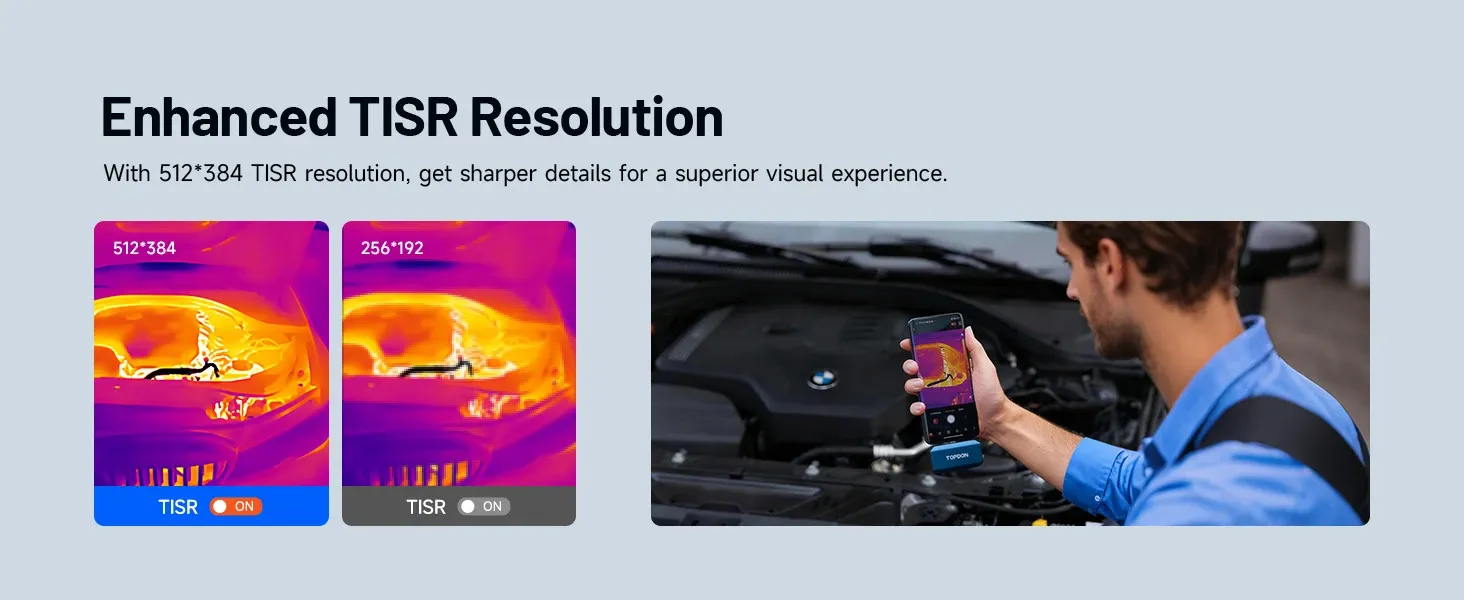
For professional diagnostics, a sensor that outputs 512x384 TISR-enhanced resolution is a strong starting point. That level gives clearer edges on pipework, insulation gaps, and overloaded components than basic entry-level modules. Honestly, I've tried cheaper alternatives and they just don't cut it when you need to separate a warm cable bundle from the background.
Temperature range and practical use
Look for a wide working range, not just a big headline number. A unit rated from -20℃ to 550℃ covers winter external envelope checks, domestic heating faults, and many electrical applications. That said, if you're doing hot process work or industrial plant, you may want a specialist camera with a higher ceiling.
Frame rate and live viewing
25Hz live viewing is decent for handheld work. It keeps motion readable when you pan across switchgear or scan cavity walls. Lower frame rates can feel clunky, especially when you're trying to hold steady on awkward access points., a favourite among Britain’s tradespeople
Minimum useful extras
My mate swears by a camera that can save snapshots straight to the handset, and I get why. You'll want app controls for palette changes, spot markers, and distance-based reading support. A clip-on design should also be light enough for one-handed use. If it pulls the phone balance badly, you'll hate using it by day two.
For buyers checking standards, it's also sensible to align your workflow with guidance from the Health and Safety Executive for workplace risk control, and BSI for survey and inspection good practice. If you're buying for company use, that paperwork matters just as much as the screen.
The topdontc Android thermal camera: what it actually offers

For a lot of UK trade buyers, the sweet spot is a unit that gives serious diagnostic value without jumping into full-blown survey-camera pricing. The topdontc Android thermal imaging model sits in that space well. It's listed at £259.99, which is far from the cheapest — but the spec sheet is aimed at real work, not just demo videos.
The headline figures are useful. You get 512x384 TISR-enhanced resolution, 25Hz live viewing, and a temperature span of -20℃ to 550℃. For building envelopes, damp tracing, fuse boards, small motors, and refrigeration checks, that's a very workable combination. For most day-to-day inspection tasks, it's more than enough.
Price: £259.99
Resolution: 512x384 TISR-enhanced
Live frame rate: 25Hz
Temperature range: -20℃ to 550℃
The price might sting at first glance, but if you're using it to catch a failing circuit, identify missing insulation, or show a client a cold bridge with a visual record, it can pay for itself on a single call-out. That's not marketing fluff — that's time saved and better evidence.
If you're comparing broader options, topdontc's wider product pages such as thermal imaging camera, FLIR thermal camera, and thermal imaging are worth a look. They give context if you're deciding whether to stay in phone-based kit or step up to a dedicated camera. For general browsing, the main site at topdontc.co.uk is the cleanest starting point.
Comparison table: key specs and use cases
This table compares the main buying points professionals usually ask about. The right pick depends on whether you're doing thermal surveys, electrical maintenance, or quick energy checks.
| Spec / Use case | Topdontc Android thermal unit | Typical entry-level phone attachment | Dedicated survey camera |
|---|---|---|---|
| Price | £259.99 | £100-£180 | £800-£2,500+ |
| Thermal resolution | 512x384 TISR-enhanced | 80x60 to 160x120 | 160x120 to 320x240+ |
| Live viewing | 25Hz | 8Hz-15Hz | 30Hz-60Hz |
| Temperature range | -20℃ to 550℃ | -10℃ to 120℃ | -20℃ to 650℃+ |
| Best for | Building checks, electrical faults, energy audits | Occasional diagnostics | Detailed reporting, industrial analysis |
| Portability | High | High | Medium to low |
The big gap is speed and clarity. An Android thermal attachment is far easier to carry than a dedicated unit, but cheaper models can feel blurry or laggy. If you need a thermal vision device for repeated use across multiple sites, that 25Hz live view is the bit that keeps the experience usable in the real world., meeting British quality expectations
Best uses for UK engineers, surveyors and electricians
The best jobs for a thermal vision camera for android are the ones where speed and documentation matter. You want fast evidence, a clear image, and enough temperature range to make the diagnosis obvious.
Building inspections and damp surveys
Thermal imaging helps show missing insulation, air leakage, and cold bridges around windows, roof voids, and service penetrations. In a typical terraced property, a temperature spread of even 2℃ to 4℃ can flag a problem area worth closer inspection. I've used that approach on older Belfast stock and it's brilliant for narrowing down where to look next.
Electrical maintenance
Overheating breakers, loose terminations, and load imbalance show up well if your camera has good resolution and a stable frame rate. For switchgear, the key is consistent viewing at a distance of about 0.5m to 2m, depending on enclosure access. You're not guessing — you're checking for hotspots that can be compared against surrounding components.
Energy audits and planned maintenance
Energy assessors and FM teams use thermal scans to support retrofit decisions, HVAC checks, and follow-up maintenance records. A phone-based thermal camera is handy because you can pair image capture with notes on the spot. That saves a second site visit, which clients love and managers definitely notice.
What it's not best for
It's not the right tool for high-end compliance reporting on its own, and it won't replace specialist probes where contact measurement is required. If you need a precise temperature trace for process validation, use the right instrument. No shortcuts — not on a proper job.
Compliance, safety and standards
Thermal tools are low-risk compared with live electrical testing, but they still sit inside a proper workplace process. If you're using them on sites with access rules, isolation requirements, or confined areas, your method statement matters.
For UK employers and contractors, the HSE guidance on working safely around electrical systems and site risk control is the place to start. If you're building internal inspection procedures, BSI standards and related survey guidance can help keep reporting consistent. And if a supplier is making big claims, GOV.UK is useful for checking trading and product compliance routes.
Practical rule: use thermal scans as evidence, not as the only diagnosis.
Best practice: compare readings against ambient conditions and repeat if airflow or load changes.
Reporting tip: note date, time, room temperature, and distance from target.
If you're in electrical maintenance, a hot spot is only meaningful if the load conditions are known. That's why a quick note on circuit loading, weather, and time of day makes such a difference — it's the gap between a decent report and a useless one.
Buying advice for 2026
If you're buying now, think about 2026 workflows, not just the next job. More teams are using phone-based imaging because it reduces carry weight and speeds up reporting. That trend has stuck through this spring, and it's not slowing down., popular across England
The right thermal vision camera for android should feel like a proper field tool. You'll want clear imagery, a sensible app, and a temperature range that covers your normal work without forcing you to guess. If your main work is surveys or fault-finding, prioritise 512x384-class detail over flashy app extras every time.
My short buying checklist
Does it run well on your actual Android handset? Can you hold it one-handed? Does it give a clean thermal image at 25Hz? Can it handle at least -20℃ for cold-weather checks and up to 550℃ for electrical and plant work? If the answer is yes to all four, you're in good shape.
I've seen people buy on price alone and regret it a month later. That cheap unit feels fine in the office, then falls apart on site when the screen lags or the hotspot is fuzzy. Worth the extra spend? Usually, yes — if you're using it weekly.
Frequently Asked Questions
What makes a vision camera for android suitable for professional use?
Professional use starts with usable image detail and stable live viewing. A model with 512x384 TISR-enhanced resolution and 25Hz refresh is far better for inspections than a basic low-frame-rate attachment. You'll also want a broad temperature range, ideally around -20℃ to 550℃, so the same tool can handle building, electrical, and maintenance work.
Can an Android thermal camera replace a full survey camera?
No, not completely. A thermal attachment is brilliant for fast checks, evidence photos, and on-the-spot diagnosis, but dedicated survey cameras still win for advanced reporting and specialist workflows. If you need repeated formal surveys, a standalone unit may be the better fit. For day-to-day inspections, though, a phone attachment can save serious time.
Is 25Hz live viewing enough for electrical maintenance?
Yes, 25Hz is enough for most handheld electrical checks. It gives smoother movement than 8Hz or 15Hz units, which helps when you scan switchboards, motors, and cable routes. For fast-moving or highly detailed industrial work, a higher frame rate can be useful, but 25Hz is a solid practical level for site use.
What temperature range should I look for in a thermal camera attachment?
A range of -20℃ to 550℃ covers most UK inspection and maintenance tasks. It's useful for winter envelope surveys, heating faults, and many electrical hotspots. If you work on hot process systems, boilers, or industrial plant, check whether you need a higher maximum. Don't buy a range you won't use, but don't underbuy either.
Do I need to follow any UK standards when using thermal imaging on site?
Yes, you should work within normal site safety procedures and recording practices. HSE guidance is the starting point for workplace risk control, and BSI references are useful if you're building formal inspection workflows. For company procurement or compliance concerns, GOV.UK and Trading Standards guidance can help you check supplier claims and product expectations.
What's the best use case for a phone-based thermal imager?
The best use case is fast, repeatable diagnosis: building inspections, electrical maintenance, HVAC checks, and energy audits. It's ideal when you need to document a thermal issue with images and notes straight away. If the job depends on portability and quick evidence, a phone-based thermal imager is often the most practical option.
Key takeaways
- A thermal vision camera for android is best judged by resolution, frame rate, and temperature range, not by price alone.
- 512x384 TISR-enhanced resolution and 25Hz live viewing give proper site usability for inspections and fault-finding.
- The topdontc Android thermal camera at £259.99 sits in a sensible middle ground for UK trade buyers.
- -20℃ to 550℃ covers most building, electrical, and energy audit tasks without forcing compromise.
- For formal reporting, keep notes on ambient temperature, load, time, and distance from target.
- UK professionals should align use with HSE guidance and relevant BSI practices.
- If you want portable diagnostics that stay useful through 2026, a thermal attachment can be bang for your buck.
For engineers, surveyors, and electricians who need quick evidence without carrying a second heavy device, a thermal vision camera for android makes real sense. It's not magic — it's just a practical bit of kit that helps you spot faults faster, explain them better, and get on with the job.
Ready to try TopdOnTC?
Shop Now — £597.98